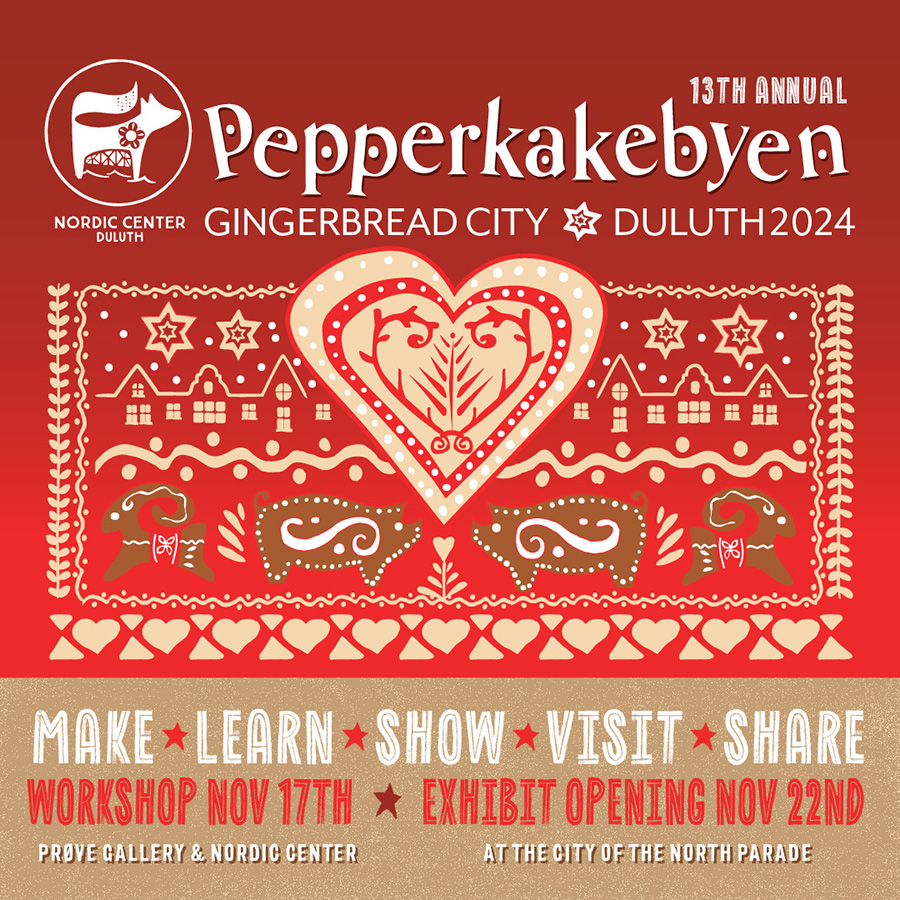


November 21 – December 13, 2025
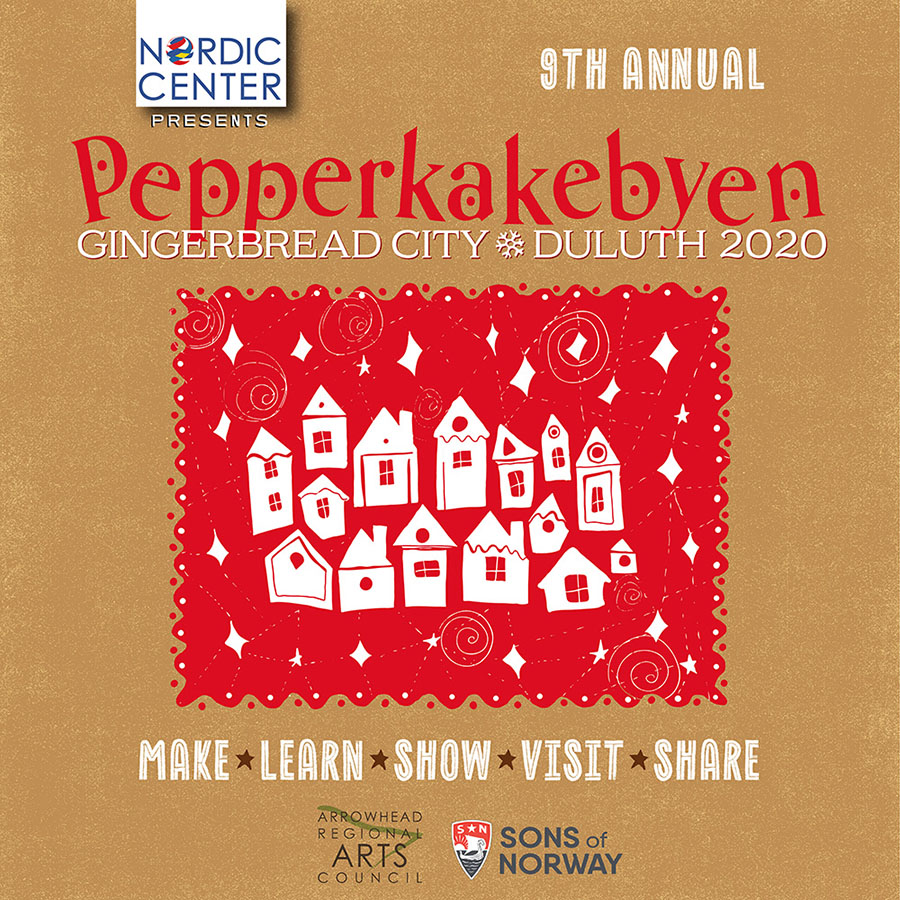
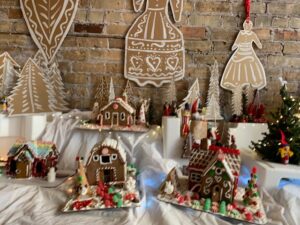
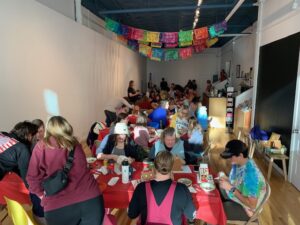
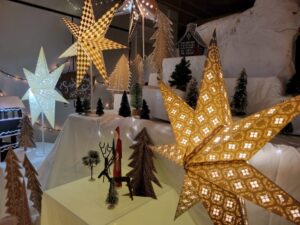
This annual event begins in mid-November when the community is invited to a gingerbread decorating workshop with Patrick Mulcahy. Each year scores of community members decorate gingerbread houses and bring them to the center to create the Gingerbread Village. Saturday visits will feature hands-on Nordic holiday craft activities, stories, and traditions to be shared for all to enjoy.
Help us to build our annual Gingerbread City!
MAKE YOUR OWN:
The sky’s the limit! Create your very own gingerbread house.
LEARN HOW:
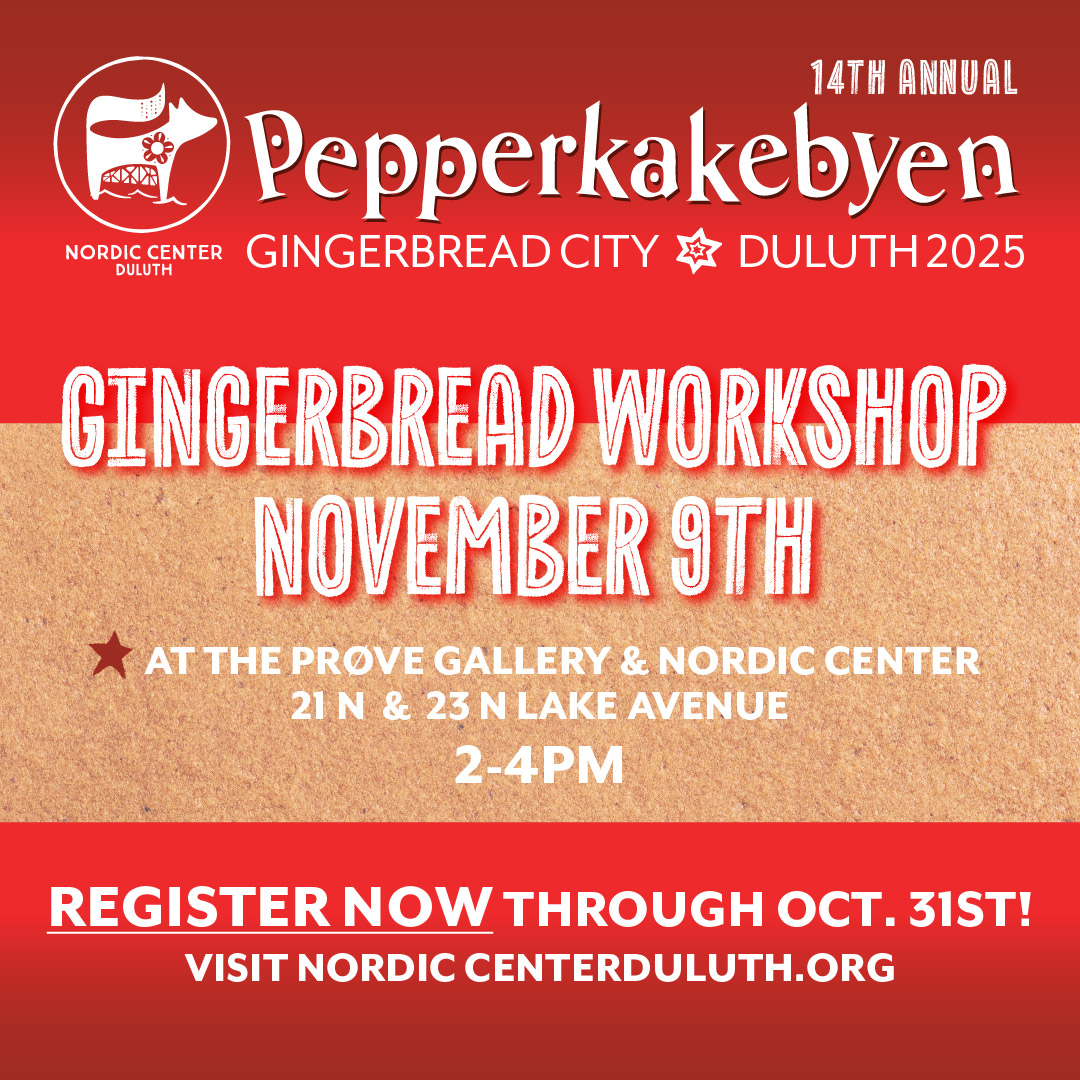
Build your gingerbread house at a workshop hosted by Patrick the Gingerbread Man on Nov 9th from 2-4PM. You will learn tips and tricks on how to build and decorate the house(s) you have purchased. Register for this event on the Nordic Center website by October 31st. $30 (plus processing fees) per kit.
SHOW YOURS:
Want to have your house included in our spectacular display? Just make sure the house is no wider than 2’ so it fits through our doors!
VISIT:
Come out to see the completed Pepperkakebyen on Nov 21 from 6-8 PM, the same night as The City of the North Parade.
Open for viewing Fridays 12-4 and Saturdays 1-4pm Nov 22st – Dec 13th (Closed on 11/29 & 11/30 Thanksgiving)
SHARE:
Send us your photo to be included in our online Gingerbread House website gallery. Use #PepperkakebyenDuluth in your social media!
Order your kit by October 31st!
OCTOBER 31ST
LAST DAY TO REGISTER FOR THE GINGERBREAD CLASS. $30 (plus processing fees) per kit.
NOVEMBER 9TH
WORKSHOP FROM 2-4PM AT THE PRØVE GALLERY (21 N LAKE AVE )
AND NORDIC CENTER (23 N LAKE AVE)
DROP OFF YOUR HOMEMADE GINGERBREAD HOUSES 2-4PM
NOVEMBER 14TH & 15TH
DROP OFF YOUR HOMEMADE GINGERBREAD HOUSES 12-4PM
NOVEMBER 21ST
PEPPERKAKEBYEN EXHIBIT OPENING 6-8 PM
DURING THE CITY OF NORTH PARADE
NOVEMBER 22ND – DECEMBER 13TH
Come to visit the Gingerbread City during our gallery hours from Friday 12-4 and Saturday from 1-4 PM!
(closed on 11/29 & 11/30 Thanksgiving)
DECEMBER 13TH
PICK UP YOUR GINGERBREAD HOUSES FROM 1-3 PM AT NORDIC CENTER
About Gingerbread and Pepperkaker
Making, eating, and decorating with gingerbread has a long history throughout the Nordic countries of Norway, Sweden, Denmark, Iceland, and Finland.
In Norway, the most popular form of ginger confection is the pepperkaker. Other Nordic countries have similar cookies: pepparkakor (Swedish), brunkager (Danish), piparkökur (Icelandic), and piparkakut (Finnish). In the Baltic countries they have piparkūkas (Latvian) and piparkoogid (Estonian).
Pepperkaker are thin, very brittle cookies or biscuits that are particularly associated with the extended Christmas period. In Norway and Sweden, pepperkaker are also used as window decorations, the pepperkaker are then a little thicker than usual and decorated with glaze and candy. Many families bake pepperkaker as a tradition with their kids.
The harder style gingerbread is often used to build gingerbread houses similar to the “witch’s house” encountered by Hansel and Gretel. These houses, covered with a variety of candies and icing, are popular Christmas decorations, often built by children with the help of their parents.
Since 1991, the people of Bergen, Norway, have built a city of gingerbread houses each year before Christmas. Named Pepperkakebyen, Norwegian for “gingerbread city”, it is claimed to be the world’s largest such city. The Duluth Gingerbread City is modeled after Pepperkakebyen in Bergen, Norway. DATES BACK TO MEDIEVAL TIMES
Gingerbread was brought to Europe in 992 by the Armenian monk Gregory of Nicopolis who taught French priests to make it.
During the 13th century, Gingerbread was brought to Sweden by German immigrants. Early references from the Vadstena Abbey show how the Swedish nuns were baking gingerbread to ease indigestion in 1444. It was the custom to bake white biscuits and paint them as window decorations.
The first documented trade of gingerbread biscuits dates to the 17th century, where they were sold in monasteries, pharmacies and town square farmers’ markets. In Medieval England gingerbread was thought to have medicinal properties.
GINGER = MEDICINE
Notes have been discovered dating back to 1444 describing how the nuns in Vadstena, Sweden, baked and ate spiced ginger thins to help their digestion. At that time, pepper, cardamom, aniseed, fennel, cedar oil, lemon and pomegranate peels were also ingredients in the dough, in addition to the traditional ginger, cinnamon, and cloves. During the Middle Ages, the dough was sweetened with honey rather than sugar.
GINGER MAKES YOU HAPPY
The Swedish-Norwegian-Danish King Hans (regent 1497-1501) was prescribed ginger thins by his doctor, who may have heard about the nuns’ cookies in Vadstena. Apparently the King suffered from stomach aches and a bad temper. He got better after eating spiced ginger thins and that’s why people say that gingerbread made you happy.